
You collect a small capillary blood sample at home using a precision kit.
The sample is analyzed in a specialized laboratory using a functional bioenergetic assay that measures mitochondrial performance in real time.
Mitochondrial Function Test mescreen™
What are mitochondria and why are they so important?
Mitochondria are the energy centers of your cells.
They regulate ATP production, cellular repair, oxidative balance, inflammation control, and metabolic resilience.
Declining mitochondrial function is linked to fatigue, accelerated aging, hormonal imbalance, chronic inflammation, and reduced stress adaptation.
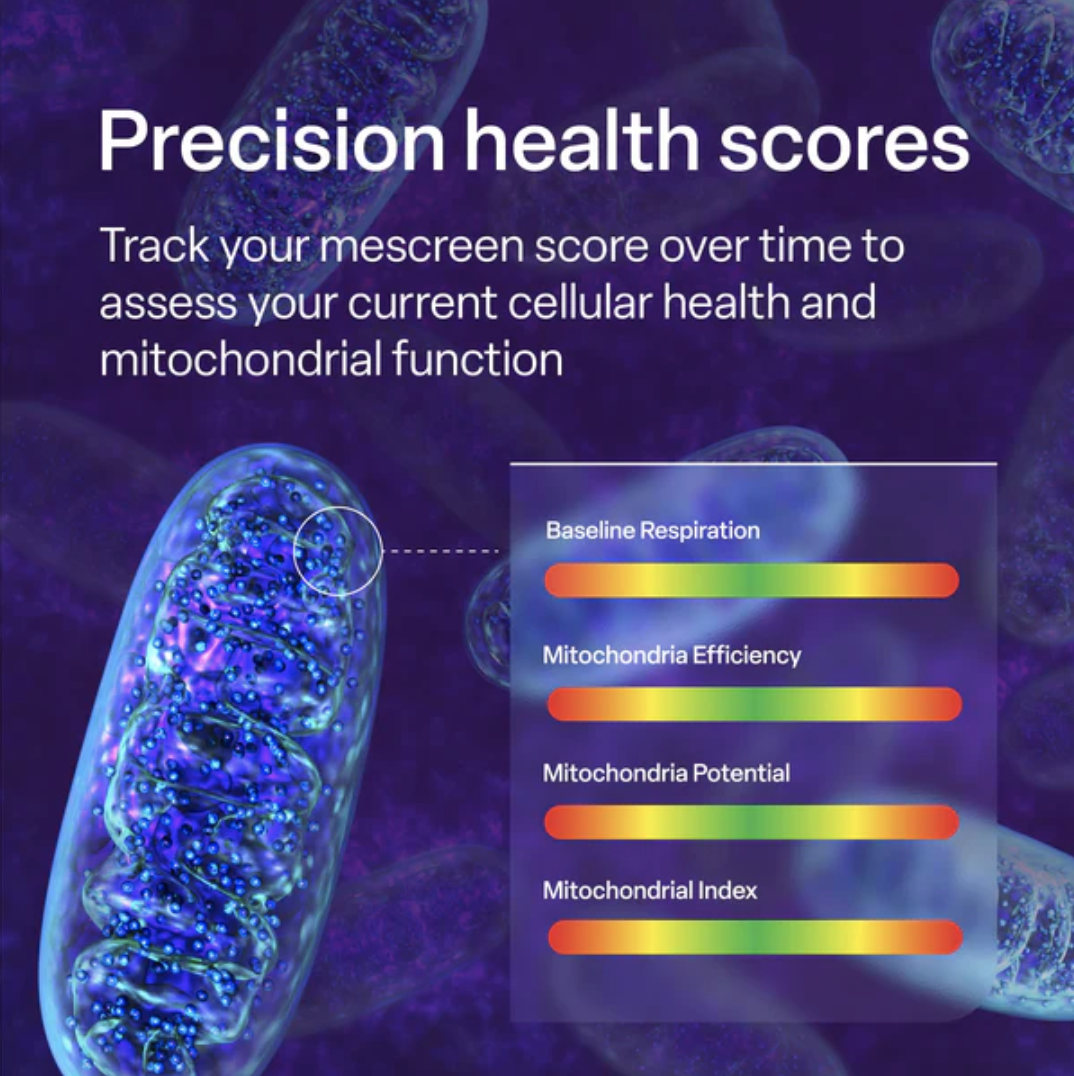
mescreen™ evaluates how efficiently your mitochondria perform under baseline and stress conditions — giving you a real-time bioenergetic profile of your cellular health.
Area(s)
Longevity • Cellular Energy • Metabolic Health • Hormonal Resilience • Precision Diagnostics
A functional mitochondrial efficiency assessment designed to measure cellular performance, oxidative stress response, and bioenergetic adaptability.
Duration
Blood spot collection: < 10 minutes
Advanced laboratory analysis: Results available in 3–4 weeks
Includes personalized digital report + specialist consultation.
Frequency
Recommended every 6–12 months
Ideal for tracking the impact of lifestyle, supplementation, hormonal optimization, regenerative treatments, and longevity protocols.


What to Expect
How it Works
How We Do It
mescreen™ evaluates 12 key mitochondrial efficiency markers including:
-
Basal respiration
-
Mitochondrial efficiency
-
Mitochondrial potential
-
Mitochondrial index
-
Glycolytic score
-
Aerobic score
-
Energetic score
-
Q-score
-
Baseline ROS
-
Stressed ROS
-
Baseline mitochondrial network
-
Stressed mitochondrial network
The test quantifies reactive oxygen species (ROS) under baseline and stress conditions and analyzes mitochondrial structure and adaptability.
Side Effects
There are no systemic side effects.
You may experience mild, temporary discomfort at the finger-prick site.
Time to Full Effect
Results are delivered within 3–4 weeks.
Improvements in mitochondrial performance depend on your personalized protocol and typically require 8–12 weeks for measurable changes.
mescreen™
The most advanced functional mitochondrial assessment available today.
At EV Clinic, we believe that true anti-aging begins at the cellular level.
Your mitochondria are the engines of your cells — responsible for energy production, resilience, repair, and longevity.
mescreen™ is a next-generation functional bioenergetic assay that measures how well your mitochondria actually perform in real time — not genetically, but functionally.
Questions? We’ve got answers.
What exactly does mescreen™ measure?
mescreen™ evaluates real-time mitochondrial performance using a 12-marker bioenergetic panel.
It measures:
• Basal respiration
• Mitochondrial efficiency
• Mitochondrial potential
• Mitochondrial index
• Glycolytic and aerobic capacity
• Reactive Oxygen Species (ROS) under baseline and stress
• Mitochondrial network structure and adaptability
This provides a functional energetic profile of your cellular health — not a genetic prediction, but an active performance assessment.
How is this different from genetic or standard blood tests?
Genetic tests show predispositions.
Standard blood panels measure static biomarkers.
mescreen™ is a functional bioenergetic assay — it measures how your mitochondria are actually performing under real biological conditions, including stress response.
It evaluates adaptability, resilience, and oxidative balance at the cellular level.
Why are mitochondria so important for aging and energy?
Mitochondria produce ATP — the energy currency of your cells.
When mitochondrial efficiency declines, it can contribute to:
• Fatigue
• Slower recovery
• Hormonal imbalance
• Increased oxidative stress
• Accelerated skin aging
• Reduced metabolic flexibility
Healthy mitochondria are foundational to longevity and cellular resilience.
Can mitochondrial efficiency improve?
Yes.
Mitochondrial function is dynamic and responsive to:
• Targeted supplementation
• Nutritional optimization
• Hormonal alignment
• Stress modulation
• Sleep optimization
• Structured exercise
• Regenerative therapies
Retesting allows you to objectively measure improvement and track biological adaptation over time.
Is this test useful even if I feel healthy?
Absolutely.
Mitochondrial dysfunction often develops silently before clinical symptoms appear.
mescreen™ helps detect subtle energetic decline early — allowing proactive optimization before disease manifests.